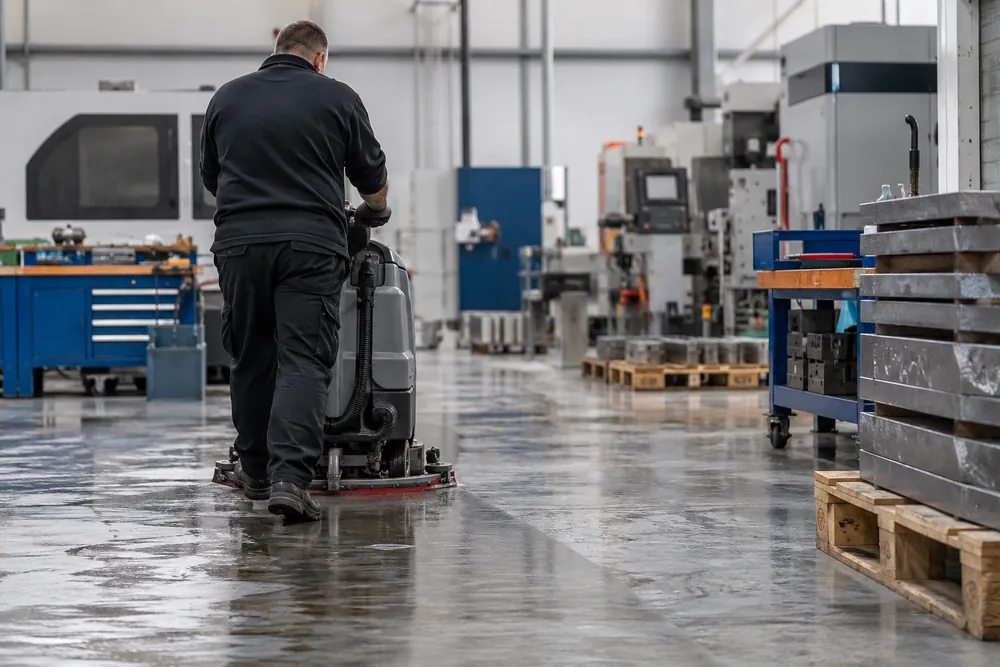
Understand The Contamination First
Industrial cleaning involves more than using a larger machine on a factory floor. Dust, grease, coolant residue and tracked material behave differently and require different controls. Before agreeing work, we ask what is produced on the premises and what the cleaning residue may contain.
Routine housekeeping in a light assembly unit is a different task from removing hazardous process dust. Describe the material honestly, including known substances and any relevant assessment. Unknown powder, suspect asbestos debris, chemical incidents or potentially explosive atmospheres require specialist assessment rather than a general cleaning booking.
Define The Work Area And Equipment Limits
The proposed scope can include suitable floor areas, pedestrian routes, accessible external surfaces and staff welfare facilities. Machinery interiors, electrical panels, extraction systems and product contact equipment are not assumed to be included. Those tasks need explicit competence, isolation and technical procedures agreed with the premises manager.
Floor coatings should be identified before detergents or mechanical agitation are selected. A damaged coating may already be lifting, while an oily floor can require a controlled degreasing process and suitable recovery of dirty solution. Agree an inconspicuous test area if compatibility is uncertain.
Cleaning around production stock also requires a plan. Move vulnerable materials or protect them against splash and dust, and identify items that cannot be disturbed. No cleaning method should redirect contamination towards neighbouring products or an open production process.
Industrial Safety And Relevant UK Rules
The Control of Substances Hazardous to Health Regulations 2002 apply where cleaning work could expose people to hazardous substances. The task assessment should cover both the product used and the contamination removed. Selection of vacuum equipment and dust control must follow the specific hazard, as explained in HSE COSHH guidance.
The Provision and Use of Work Equipment Regulations 1998, known as PUWER, are relevant to equipment used at work. The cleaning plan must agree how machinery is made safe before anyone works near hazardous parts. Read the HSE PUWER overview alongside your own machinery procedures.
Where work at height is required, the Work at Height Regulations 2005 apply. Reaching overhead ledges is not permission to improvise access. Any elevated cleaning needs a separate method and suitable access arrangements, assessed before the job is accepted.
A Controlled Industrial Cleaning Sequence
Begin with a walkthrough and a description of the residue. Identify pedestrian and vehicle routes, drainage constraints, water and power supplies, and any permits or shutdowns. Agree the boundary between cleaning responsibilities and the duties of your maintenance or production staff.
Next, make the agreed area available and isolate equipment through the authorised site procedure where needed. Remove or recover loose contamination with a suitable method, then treat remaining residues using compatible equipment. Collect the cleaning waste rather than assuming it can be discharged into a drain.
The final walkthrough checks that the agreed area can be returned to use. Record defects such as damaged flooring or leaks that cleaning cannot fix. A recurring spill should prompt a maintenance investigation as well as a revised housekeeping task.
When Industrial Cleaning Is Useful
A periodic clean may be useful before a maintenance shutdown, a change in production layout or a return to service after building work. More frequent work may be appropriate around entrances and welfare facilities. The schedule should follow actual contamination and operating conditions rather than a generic factory timetable.
A warehouse with mostly packaging dust may need our warehouse cleaning service. If the concern is a heavy residue in an otherwise ordinary workspace, see commercial deep cleaning and identify the substance before requesting a quotation.
What Changes The Quote
Cost depends on the residue, surface area, access, isolation requirements, waste handling and the time available to work. A clear floor during a shutdown is different from a restricted route beside live operations. Provide photos only where your security policy allows, and include the known materials and proposed work window in your industrial cleaning enquiry.
Part Of Your Wider Cleaning Routine
For a whole-building view, our commercial cleaning Nottingham guide brings the services together. You can also check the nearby areas covered or read the cleaning FAQs before sending your premises details.
Industrial Cleaning Questions
Can Industrial Cleaning Be Arranged Outside Opening Hours?
Industrial Cleaning outside opening hours can be discussed when it helps reduce interruption, subject to access arrangements and availability. Tell us your earliest and latest permitted times, alarm procedures and any lone working restrictions. The agreed schedule should identify who opens and closes the premises, together with any areas that may remain occupied during the visit.
What Information Is Needed For A Industrial Cleaning Quote?
A industrial cleaning quote starts with the premises postcode, approximate size, current condition and tasks required. Include the available access window and any known hazards or restricted areas. Those details help separate the regular scope from additional work, with the proposed method and terms agreed before a booking is made.