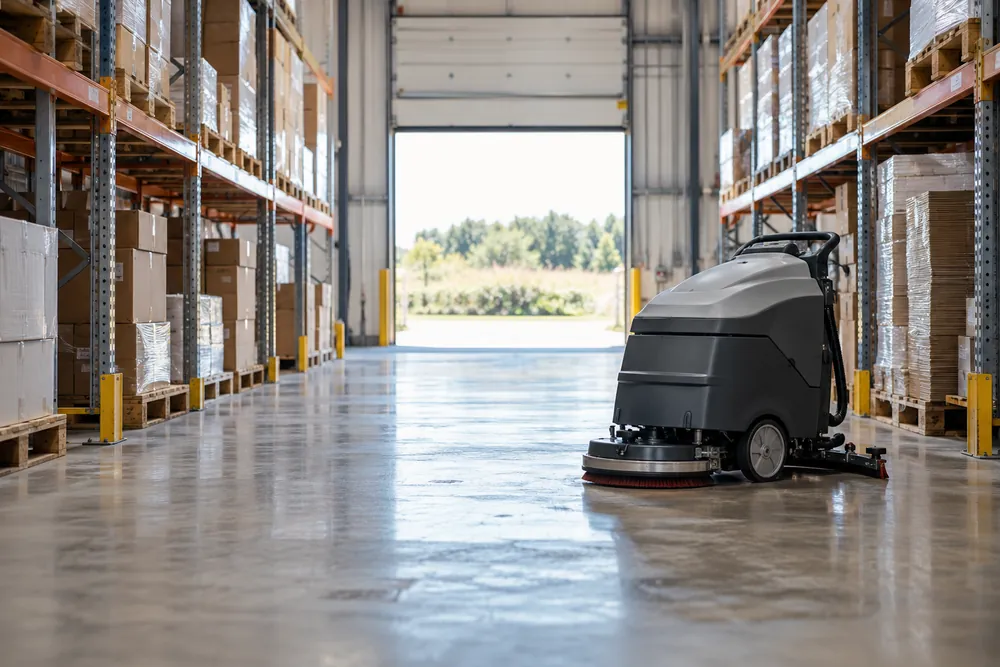
Cleaning That Respects Warehouse Operations
A warehouse has to move goods as well as people. Cleaning needs to work with picking routes, replenishment and loading activity, while keeping stock protected. We start by identifying the operational areas and deciding when they can safely be made available for the agreed tasks.
Packaging dust, pallet debris and tracked-in moisture can create different housekeeping problems within the same building. A clean loading office does not demonstrate that the picking aisles are being managed well. The task sheet should distinguish storage floors, pedestrian routes, loading approaches and welfare facilities.
What The Warehouse Cleaning Scope Can Cover
Suitable work can include floor debris removal, machine cleaning of compatible hard floors and detail around accessible edges. Entrances and staff spaces may need their own routine. The available method depends on the floor finish, residue and space for equipment to manoeuvre.
Racking, elevated ledges and stored goods must be treated as separate access questions. A general floor clean does not include climbing the racking or disturbing stock. Any high level work needs a suitable method, appropriate access equipment and an agreed exclusion area beneath it.
Discuss whether the floor has coatings, painted lines or damaged joints. Aggressive products or pads can affect markings and finishes. Where the existing condition is uncertain, a controlled test area is more useful than assuming that the same treatment is suitable throughout the building.
Vehicle Routes, Slips And Work Equipment
The HSE workplace transport guidance is relevant when planning work around vehicle routes. Cleaning areas should be coordinated with the responsible site manager. Do not rely on a cleaner stepping aside when a forklift approaches as the main way of controlling vehicle interaction.
The Workplace (Health, Safety and Welfare) Regulations 1992 include duties on cleanliness and the condition of traffic routes. Cleaning supports those duties by removing residue and debris, but damaged flooring or recurring leaks need separate repairs. A cleaning record should flag defects that the task cannot remedy.
Cleaning machines used at work fall within the Provision and Use of Work Equipment Regulations 1998. Operators need suitable instruction and equipment for the conditions. Battery charging arrangements, cables and storage should form part of the practical plan rather than being improvised at the end of a shift.
A Sensible Warehouse Cleaning Sequence
Start with a walkthrough showing the type of stock, floor condition and main movements. Mark the areas that can be released for cleaning, including the route to water and waste points. Agree how the floor will be handed back to operations once work is complete.
Next, remove loose debris using equipment appropriate for the material. Dust that may be hazardous needs assessment before it is disturbed, with suitable controls rather than indiscriminate sweeping. If unknown contamination is found, stop and refer it to the site contact for assessment.
Carry out the agreed floor treatment in manageable sections and recover dirty solution where the method requires it. Protect stock and keep access controlled until the surface is suitable for use. Complete the inspection with attention to edges, aisle obstructions and any remaining moisture.
Match Frequency To The Use Of The Building
A dispatch area and a low-traffic storage bay may need different schedules. Seasonal activity can also change how much packaging or grit reaches the floor. Review the routine when stock type, layout or shift patterns change, rather than retaining the original schedule by default.
For factory areas with oils or process residues, read our industrial cleaning guide. Staff toilets and kitchens can be included through washroom services and contract cleaning, with each task listed separately from the warehouse floor work.
What A Warehouse Cleaning Quote Depends On
The quote reflects floor area, racking layout, contamination, operational restrictions and the machinery suitable for the job. A clear floor during a shutdown is different from short access slots between loading movements. Height work, difficult residues and waste handling should be priced separately when they need a distinct method.
Send the postcode, approximate clear floor area, shift pattern and known floor type through the warehouse cleaning enquiry form. Include access restrictions and the materials being stored. This gives a useful starting point for discussing the scope without promising a method before the conditions are understood.
Part Of Your Wider Cleaning Routine
For a whole-building view, our commercial cleaning Nottingham guide brings the services together. You can also check the nearby areas covered or read the cleaning FAQs before sending your premises details.
Warehouse Cleaning Questions
Can Warehouse Cleaning Be Arranged Outside Opening Hours?
Warehouse Cleaning outside opening hours can be discussed when it helps reduce interruption, subject to access arrangements and availability. Tell us your earliest and latest permitted times, alarm procedures and any lone working restrictions. The agreed schedule should identify who opens and closes the premises, together with any areas that may remain occupied during the visit.
What Information Is Needed For A Warehouse Cleaning Quote?
A warehouse cleaning quote starts with the premises postcode, approximate size, current condition and tasks required. Include the available access window and any known hazards or restricted areas. Those details help separate the regular scope from additional work, with the proposed method and terms agreed before a booking is made.