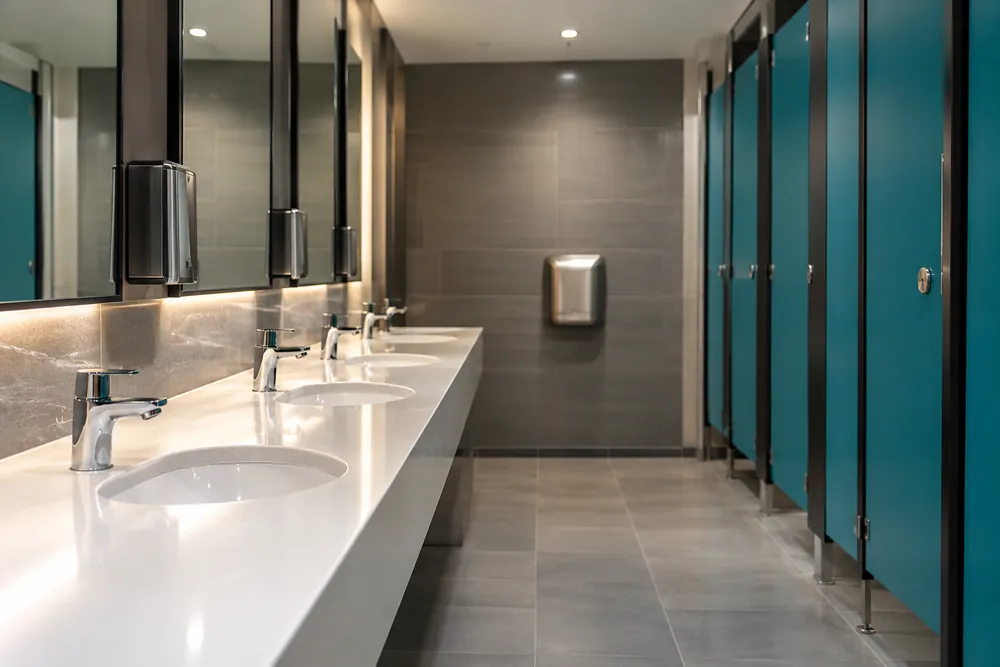
Keep Facilities Usable Through The Day
A washroom service needs to do more than refresh the room at the end of a visit. People must be able to use clean facilities with the supplies they need. We discuss usage, peak periods and the tasks your own staff can handle between scheduled cleaning visits.
Busy visitor facilities may need different checks from toilets serving a small office. A recurring lack of soap, paper or usable bins is a service issue even if the room was cleaned earlier. Agree who checks stock during opening hours and who reports a failed dispenser or a plumbing fault.
What The Washroom Task Sheet Can Include
The cleaning specification can cover toilet pans, seats, accessible external cistern surfaces, urinals, basins, taps, mirrors and cubicle touchpoints. Floors and skirting need methods suited to the finish. Detail around hinges, edges and dispenser undersides should have a stated frequency instead of being left to assumptions.
Replenishing soap, toilet paper and hand towels can be included when compatible supplies and access are available. Dispenser types and refill formats should be recorded. Confirm whether your business supplies the stock or whether a proposed service includes the cost and delivery of consumables.
Descaling is a separate consideration from ordinary cleaning. Product suitability depends on the material, including plated taps and stone surfaces. Abrasive pads or acidic products can damage finishes, so difficult residue should be assessed rather than treated with whatever product happens to be on the trolley.
Workplace Welfare Requirements
Employers must provide suitable welfare facilities under the Workplace (Health, Safety and Welfare) Regulations 1992. The requirements include toilets, washing facilities and arrangements for keeping them clean. The HSE welfare facilities guidance explains the practical duties for workplaces.
Cleaning supports those arrangements, but it does not repair ventilation, drainage or broken fittings. Report persistent odours, leaking fixtures and damaged surfaces to the person responsible for the building. Masking an odour without investigating its cause can leave the underlying issue unresolved.
Chemical use must also be assessed under COSHH. Staff need instructions for dilution, safe storage and protective equipment selected for the task. Incompatible products must never be mixed, and a change of product requires the method to be checked again.
Separation, Access And Waste
We recommend separating washroom cleaning equipment from equipment used in kitchens or offices. A documented colour system helps staff keep tools in the intended zone, but the actual colours should be explained in the site method. Used cloths need a laundering or disposal arrangement that stops them returning to clean surfaces unprepared.
Agree how facilities will remain available while work takes place. Where suitable, clean separate rooms or sections in sequence, with access controlled until surfaces are safe to use. A warning sign alone does not physically prevent someone entering a wet area.
Sanitary waste collection and other controlled waste services require separate arrangements. If waste is taken away from the premises, confirm the carrier’s authorisation and the records required. Routine cleaning does not automatically include that collection, and clinical waste or sharps need a specific procedure.
Plan The Service And Check The Result
Start by counting the facilities and identifying the busiest periods. Establish the products, dispenser formats, storage area and any access restrictions. Document the daily cleaning tasks, planned detail work and checks your own staff will perform between visits.
Inspect the room for visible residue, usable dispensers and floor condition after cleaning. Record faults and stock shortages separately from completed tasks. Repeat problems should trigger a review of the schedule or the equipment rather than simply adding another line to a cleaning log.
What Affects Washroom Service Cost
The quote depends on the number and condition of fittings, footfall, visit pattern, replenishment requirements and any periodic descaling. Consumables and waste collection should be itemised if included. A clear baseline avoids comparing a cleaning-only quote with a proposal that also supplies products.
Combine washroom tasks with contract cleaning for a recurring building routine, or ask about deep cleaning where residue has built up. Include the number of rooms and your preferred access times in the washroom service enquiry.
Part Of Your Wider Cleaning Routine
For a whole-building view, our commercial cleaning Nottingham guide brings the services together. You can also check the nearby areas covered or read the cleaning FAQs before sending your premises details.
Washroom Services Questions
Can Washroom Services Be Arranged Outside Opening Hours?
Washroom Services outside opening hours can be discussed when it helps reduce interruption, subject to access arrangements and availability. Tell us your earliest and latest permitted times, alarm procedures and any lone working restrictions. The agreed schedule should identify who opens and closes the premises, together with any areas that may remain occupied during the visit.
What Information Is Needed For A Washroom Services Quote?
A washroom services quote starts with the premises postcode, approximate size, current condition and tasks required. Include the available access window and any known hazards or restricted areas. Those details help separate the regular scope from additional work, with the proposed method and terms agreed before a booking is made.